Flying Ants vs. Termites: How to Tell the Difference Before It Costs You Thousands
If you suddenly notice insects swarming around your windows, porch lights, or doors, there’s a good chance you’re seeing either flying ants or termites. Unfortunately, many homeowners across Alabama and Louisiana mistake one for the other — and that mistake can become expensive fast.
While flying ants are mostly a nuisance, termite swarmers can signal an active termite colony already feeding on your home.
At Hilbun Pest Services, we help Gulf Coast homeowners identify termite activity quickly before hidden damage gets worse.
Why Do Flying Ants and Termites Swarm?
Both insects swarm during warmer months, especially after rain and during periods of high humidity. Swarming is part of their reproductive cycle, where winged insects leave established colonies to start new ones.
This is why homeowners commonly see them:
- around windows
- near exterior lights
- in garages
- around doors
- near crawlspaces
- along baseboards
In the Gulf Coast climate, termite swarms are especially common during spring and early summer.
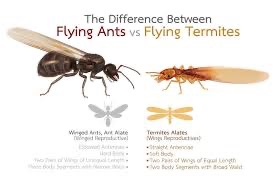
The Biggest Differences Between Flying Ants and Termites
1. Waist Shape
Flying Ants
Flying ants have a very narrow, pinched waist.
Termites
Termites have a broad, straight body with no narrow waist.
2. Wing Size
Flying Ants
Ants have two different wing sizes:
- front wings are larger
- rear wings are smaller
Termites
Termites have four wings that are all roughly the same size.
3. Antenna Shape
Flying Ants
Ant antennae are bent or elbowed.
Termites
Termite antennae are straight.
One of the Biggest Warning Signs: Discarded Wings
A common sign of termite activity is piles of discarded wings near:
- windowsills
- entry doors
- garages
- baseboards
- exterior foundation walls
Once termites land, they shed their wings and begin searching for a place to establish a new colony.
Finding discarded termite wings indoors should never be ignored.
Why Termites Are a Serious Problem
Unlike ants, termites actively feed on wood and other cellulose materials inside your home.
Over time, termite colonies can cause:
- structural wood damage
- weakened flooring
- damaged walls
- sagging wood supports
- costly repairs
Many homeowners never notice termite activity until significant damage has already occurred because termites often stay hidden behind walls or beneath flooring.
What Should You Do If You See Swarming Insects?
If you notice swarming insects inside your home:
- Avoid spraying them immediately
- Take a close-up photo if possible
- Look for discarded wings
- Check windows, doors, and baseboards
- Schedule a professional termite inspection if you are unsure
A proper inspection can help determine whether you’re dealing with harmless flying ants or an active termite issue.
Gulf Coast Homes Are Especially Vulnerable
Homes throughout Daphne, Fairhope, Mobile, and Baton Rouge face heavy termite pressure because of:
- warm temperatures
- high humidity
- frequent rainfall
- moisture-rich soil conditions
These conditions allow termite colonies to remain active for much of the year.
Schedule a Termite Inspection
If you’re seeing swarming insects or discarded wings around your home, don’t wait until visible damage appears.
Hilbun Pest Services provides termite inspections and termite protection services for homeowners across the Gulf Coast region.
Whether you’re dealing with active termites, preventative protection, or simply want peace of mind, early detection is the best defense.