
Liquid vs Bait Station Termite Treatments
If you're researching termite protection options, you've likely come across two common systems: liquid termite treatments and termite bait stations.
Both are designed to protect homes from subterranean termites, but they work in different ways and each offers unique advantages.
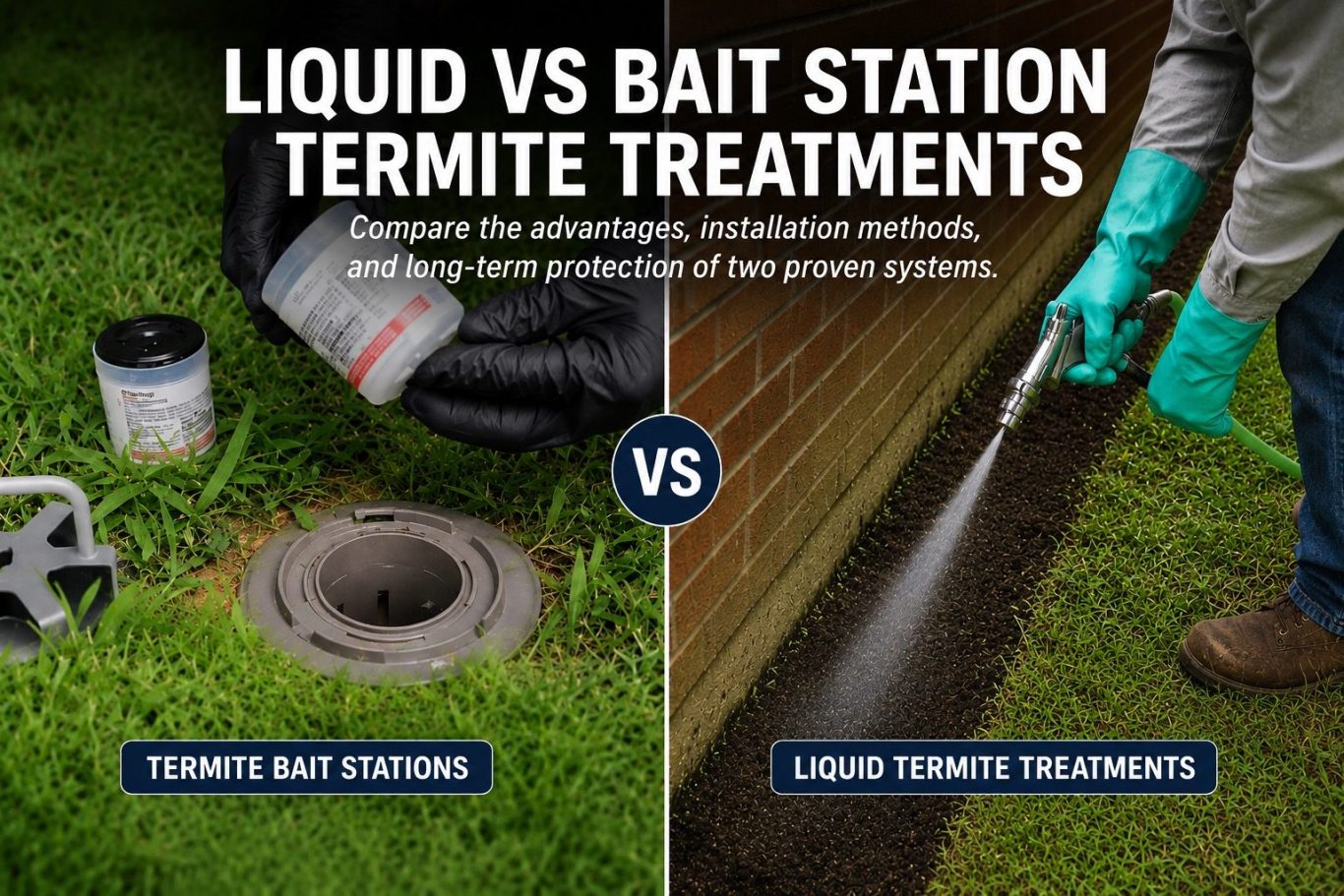
Liquid Termite Treatments
Liquid termite treatments create a treated zone around the structure using professional termite control products.
Advantages
- Creates a continuous protective barrier around the home
- Termites are exposed when they enter treated soil
- Long-lasting protection
- Does not rely on termites locating a bait station
- Can provide protection for many years when properly installed
Considerations
- Installation may require trenching and drilling
- More disruptive during installation
- Future landscaping projects may disturb treated soil and require spot treatments
Termite Bait Stations
Termite bait stations are installed in the soil around the home and monitored during routine inspections.
Advantages
- Minimal disruption during installation
- Typically no trenching or driveway drilling required
- Ongoing monitoring helps identify termite activity
- Homeowners can often see evidence of termite feeding during inspections
- Ideal for many modern homes and subdivisions
Considerations
- Relies on termites locating and feeding on the stations
- Requires ongoing monitoring and maintenance
- Protection strategy differs from a continuous treated soil barrier
Which Option Is Best?
The answer depends on the home, the property layout, and the homeowner's preferences.
Some homeowners prefer the long-term protection provided by a liquid treatment. Others prefer the minimal disruption and monitoring benefits of a bait station system.
Both options can be effective when properly installed and maintained.
During a termite evaluation, Hilbun Pest Control can explain the advantages of each system and help determine which option is the best fit for your property.
Still Have Questions?
Learn more about our: