Tips For Dealing With Rats and Mice
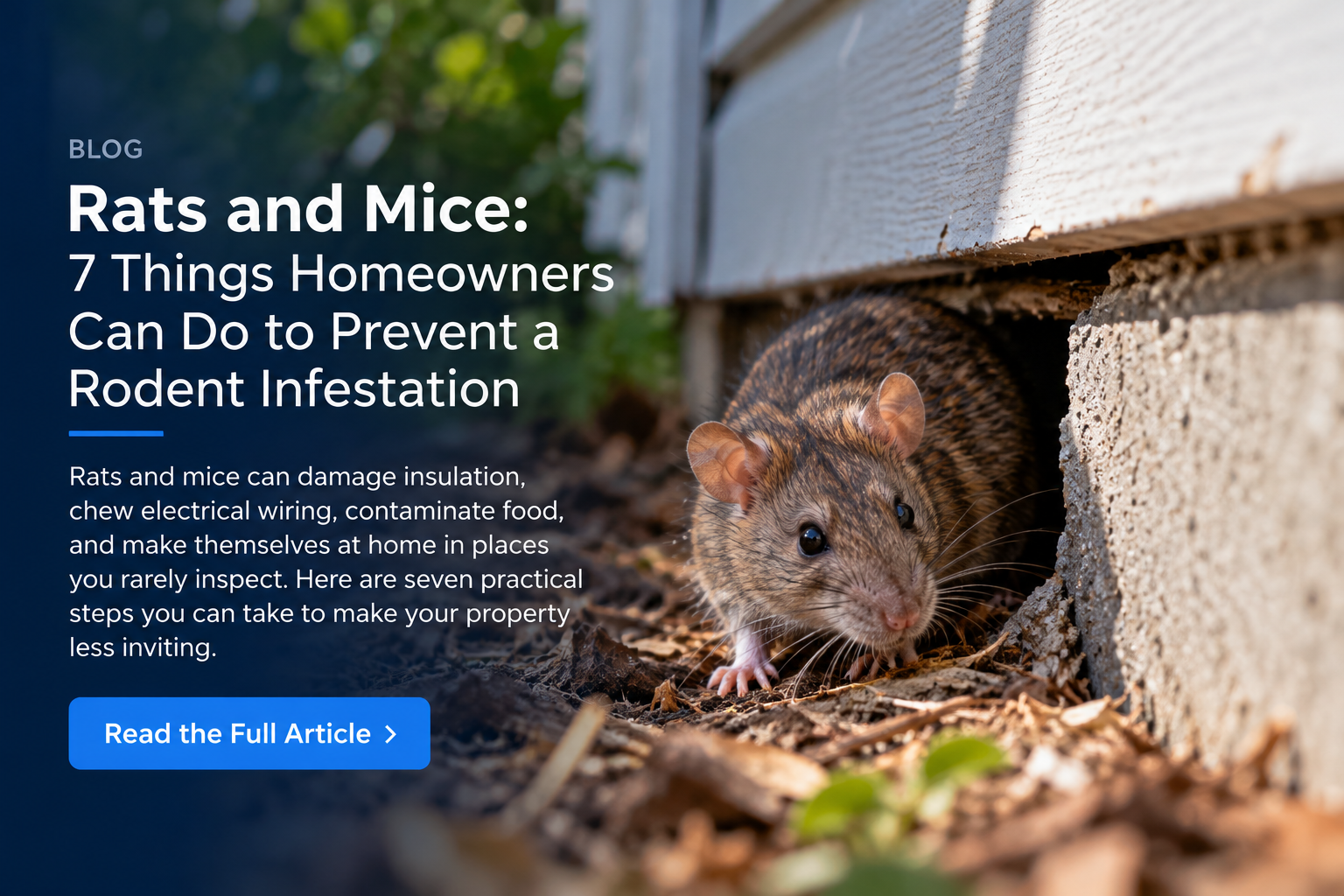
Rats and Mice: 7 Things Homeowners Can Do to Prevent a Rodent Infestation
Rats and mice are among the most frustrating pests homeowners encounter. They can damage insulation, chew electrical wiring, contaminate stored food, and make themselves at home in places you rarely inspect.
Here along the Gulf Coast, rodents aren't just a winter problem. Our relatively mild climate allows them to remain active throughout the year. However, fall is an excellent time to inspect your home and address conditions that may encourage rodents to move inside.
At Hilbun Pest Control, we've been helping homeowners and businesses manage pest problems since 2007. One thing we've learned is that successful rodent control isn't always about setting more traps or using more bait. Often, the biggest improvements come from understanding why rodents are there in the first place.
Here are seven things you can do to make your property less inviting.
1. Inspect the Outside of Your Home
Before buying traps or bait, take a walk around your house.
Look closely at areas where plumbing, electrical lines, and air conditioning equipment enter the structure. Check crawl-space vents, garage doors, soffits, and rooflines.
Mice can squeeze through openings approximately the width of a pencil, while rats can enter through surprisingly small gaps as well.
Pay particular attention to:
- Gaps around pipes and utility lines
- Damaged or missing vent covers
- Openings beneath garage and exterior doors
- Loose siding, soffits, and roofline materials
- Holes around crawl spaces and foundations
If you find an opening, don't assume that filling it with expanding foam will solve the problem. Rodents can chew through many common building materials.
Metal flashing, appropriate rodent-resistant mesh, and other durable exclusion materials are generally better choices.
Important: If rodents are already living inside, trapping and exclusion should be coordinated so animals aren't inadvertently sealed inside walls or attics.
2. Stop Feeding Rodents Without Realizing It
One of the most common reasons rodents remain around a property is access to food.
Pet food, birdseed, chicken feed, unsecured garbage, and spilled grain can all attract rats and mice.
A few simple changes can make a difference:
- Store pet food and animal feed in sturdy, tightly sealed containers.
- Avoid leaving pet food outside overnight.
- Clean up spilled birdseed and grain.
- Keep garbage containers closed.
- Remove fallen fruit and other accessible food sources.
If you keep chickens, pay particular attention to the area surrounding their feeders. Even when feed is stored securely, spilled grain can provide rodents with a dependable food supply.
3. Reduce Hiding Places Around Your Property
Rodents prefer areas where they can travel and nest without being exposed.
Overgrown vegetation, stacked lumber, dense shrubs, and cluttered storage spaces provide excellent cover.
Keep grass and vegetation maintained, remove unnecessary debris, and avoid stacking materials directly against the foundation.
You don't need to eliminate every shrub or landscape feature. The goal is to reduce protected pathways and nesting opportunities immediately around the home.
4. Learn to Recognize Rodent Activity
You may have a rodent problem long before you actually see a rat or mouse.
Some common warning signs include:
- Scratching or movement in walls and ceilings
- Droppings inside cabinets, garages, or storage spaces
- Gnaw marks on food packaging and building materials
- Shredded paper or insulation used for nesting
- Greasy rub marks along frequently traveled routes
- Burrows around foundations or outdoor structures
If you find droppings, avoid sweeping or vacuuming them while dry. Follow CDC-recommended rodent cleanup procedures to reduce exposure to potentially harmful particles.
5. Understand Why Trap Placement Matters
Snap traps can be effective tools for controlling rats and mice, but placement is often more important than the number of traps you purchase.
Rodents frequently travel along walls, behind appliances, and through protected areas rather than crossing wide-open spaces.
Place appropriately sized traps along established travel routes, following the manufacturer's instructions.
A mouse trap isn't a substitute for a rat trap. Different rodents require different equipment and approaches.
Keep traps inaccessible to children, pets, and other non-target animals.
Also remember that rats can be cautious around unfamiliar objects. A trap that hasn't caught anything after one night isn't necessarily ineffective.
6. Be Careful With Rodent Baits and Homemade Remedies
The internet is full of homemade rodent control suggestions.
Some recommend mixing household ingredients to create homemade poisons. Others suggest placing bait wherever rodents might travel.
These approaches can be ineffective, create unnecessary risks, or expose pets and wildlife to harmful substances.
If you decide to use a registered rodenticide, always follow the product label, including requirements for bait stations and placement.
For many homeowners, exclusion, sanitation, and properly placed traps are better starting points than experimenting with homemade poisons.
7. Don't Ignore the Reason Rodents Got Inside
Catching a mouse or rat doesn't necessarily mean you've solved the problem.
If an opening remains accessible, another rodent may eventually find its way inside.
Long-term prevention requires addressing the conditions that allowed the infestation to develop.
That usually means combining several approaches:
- Identifying and closing entry points
- Eliminating accessible food and water
- Reducing nesting areas
- Trapping existing rodents
- Monitoring for additional activity
This combination is commonly referred to as integrated pest management.
When Is It Time to Call a Professional?
There's nothing wrong with attempting basic rodent prevention yourself.
However, if you're hearing repeated activity inside walls or ceilings, finding fresh droppings, or dealing with rodents in difficult-to-access spaces, a professional inspection may be worthwhile.
Larger infestations can involve multiple entry points, nesting locations, and competing food sources. Simply adding more traps may not address the underlying problem.
At Hilbun Pest Control, we focus on identifying the source of rodent activity and recommending practical solutions based on the property.
Protecting Homes Throughout Alabama and Louisiana
Whether you live in Daphne, Fairhope, Spanish Fort, Baton Rouge, or the surrounding communities, the fundamentals of rodent prevention are much the same.
A little time spent inspecting your property, removing attractants, and addressing potential entry points can help prevent a much larger problem later.
Hilbun Pest Control is a family-owned, veteran-owned company serving Alabama and Louisiana since 2007.
Have a question about rats, mice, or another pest? You're welcome to reach out. We're happy to offer advice and help you understand your options, even if you aren't ready to schedule service.
Visit www.hilbunpestservices.com to learn more or follow our Facebook page at Hilbun Pest Control