Love Bug Season in Alabama & Louisiana: What Homeowners Need
Love Bug Season in Alabama & Louisiana: What Homeowners Need to Know
Every spring and fall, homeowners across Alabama and Louisiana experience a familiar sight: thousands of small black insects with reddish-orange thoraxes gathering around vehicles, garages, porches, and outdoor living spaces.
They're love bugs, and when their seasonal swarms arrive, they can be difficult to ignore.
Although love bugs don't bite, sting, or damage your home, their overwhelming numbers can make everyday outdoor activities frustrating.
At Hilbun Pest Control, we believe understanding seasonal insect activity is an important part of protecting your property. Here's what homeowners should know about love bugs, why they appear, and what actually works to reduce their impact.
What Are Love Bugs?
Love bugs are a species of march fly commonly found throughout the southeastern United States, particularly along the Gulf Coast.
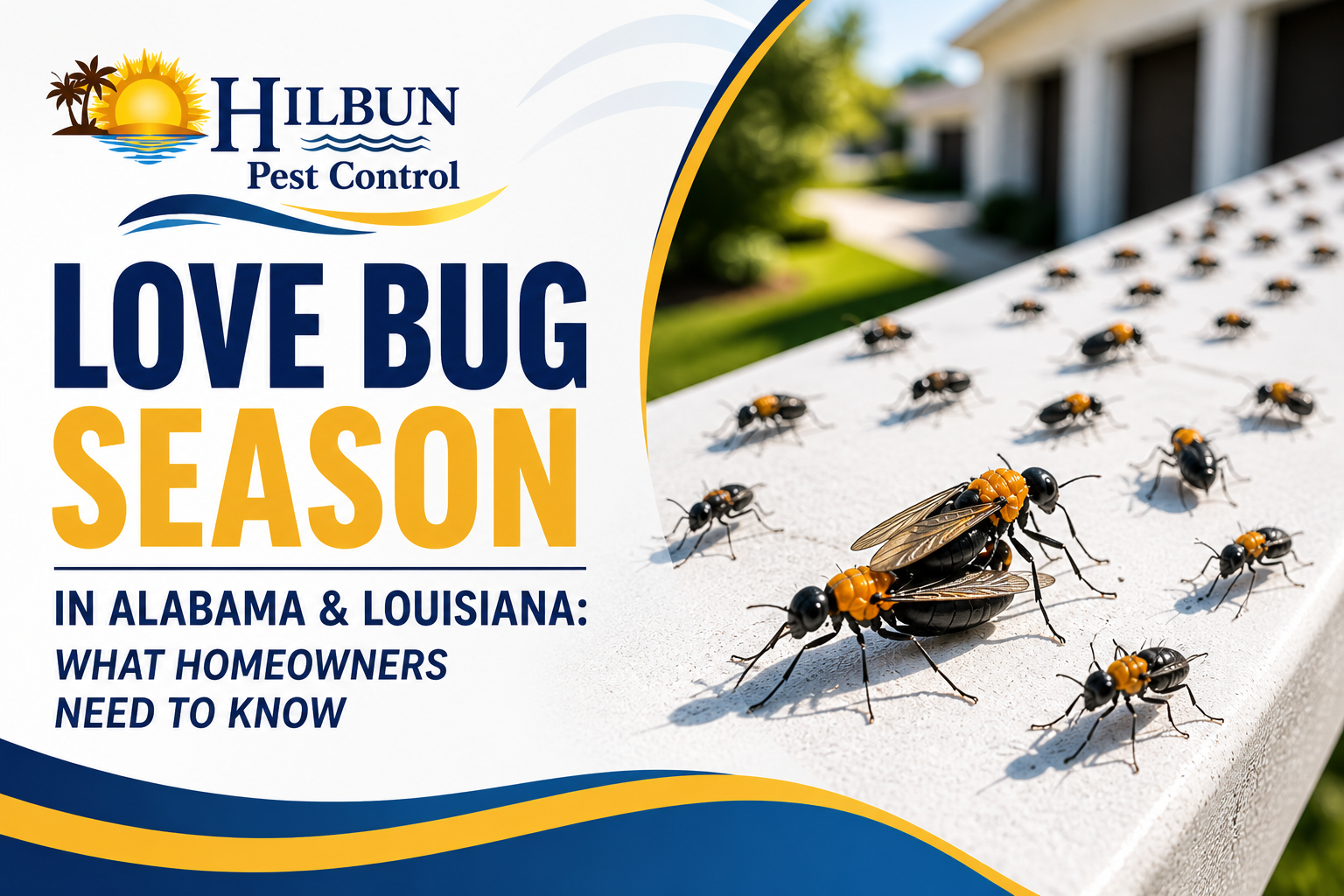
They're recognizable by their black bodies, reddish-orange thoraxes, and unusual habit of flying while attached to another love bug.
In Alabama and Louisiana, love bugs typically experience two major periods of seasonal activity:
- Spring: Usually April through May.
- Late summer and early fall: Typically August through September.
Exact timing varies depending on weather and environmental conditions.
During peak activity, homeowners may encounter large numbers of love bugs around roads, vehicles, buildings, and landscaped properties.
Why Are There So Many Love Bugs Around My House?
Love bugs thrive in the warm, humid conditions common throughout the Gulf South.
Their larvae develop in moist environments containing decaying organic material, including decomposing vegetation.
Adult love bugs may gather around roads, buildings, and vehicles. They respond to environmental cues, including certain light conditions and chemicals associated with vehicle exhaust.
This explains why you might notice particularly heavy activity around your driveway or while driving.
Homeowners in Daphne, Spanish Fort, Fairhope, Foley, and surrounding Gulf Coast communities experience these seasonal swarms.
However, seeing large numbers of love bugs doesn't necessarily indicate an infestation on your property.
Are Love Bugs Dangerous?
Fortunately, love bugs are nuisance insects rather than destructive household pests.
They do not:
- Bite or sting people.
- Damage the structure of your home.
- Feed on household materials.
- Establish colonies inside buildings.
Their primary impact comes from their overwhelming numbers.
Large swarms can interfere with outdoor activities, accumulate around entryways, and leave insect remains on vehicles.
Love bug remains should be removed promptly from automotive surfaces. Allowing them to remain, particularly in hot weather, can make cleaning more difficult and potentially damage vehicle finishes.
How to Reduce Love Bug Activity Around Your Home
Unfortunately, there isn't a practical way to eliminate large seasonal love bug populations through routine residential pest control.
However, several simple preventative measures can help reduce their impact.
1. Keep Doors and Windows Properly Sealed
Inspect window screens, weatherstripping, and exterior door seals.
Repair damaged screens and address gaps that allow flying insects to enter your home.
2. Clean Vehicles Regularly
Love bugs frequently accumulate on vehicle bumpers, windshields, and front grilles.
Wash affected surfaces promptly using automotive cleaning products and methods recommended for your vehicle's finish.
Avoid aggressive scrubbing that could damage the paint.
3. Maintain Your Landscaping
Remove excessive accumulations of decaying vegetation and maintain landscaped areas around your property.
Although ordinary yard maintenance won't prevent regional love bug swarms, maintaining your property can help address conditions that support other unwanted insects.
4. Manage Exterior Lighting
Many flying insects are attracted to artificial lighting.
Using warmer-colored exterior bulbs, reducing unnecessary nighttime lighting, and positioning lights away from entrances may help reduce general flying insect activity.
However, changing your lighting should not be considered a reliable solution for controlling love bug swarms specifically.
5. Avoid Unnecessary Pesticide Applications
Spraying your entire yard or exterior walls is unlikely to provide meaningful, lasting protection against migrating love bug populations.
Because these insects continuously arrive from surrounding areas during seasonal swarms, pesticide applications generally provide limited practical benefits.
Sometimes the most effective recommendation is knowing when treatment isn't necessary.
Do Love Bugs Mean Other Pests Are Around?
Not necessarily.
Love bugs are seasonal outdoor insects, and their presence doesn't indicate that your home has a pest infestation.
However, Alabama and Louisiana's warm temperatures, humidity, and frequent rainfall also create favorable conditions for numerous household pests.
Unlike seasonal love bug swarms, pests such as ants, cockroaches, termites, and mosquitoes may require targeted management.
Understanding the difference can save homeowners time and prevent unnecessary treatments.
For example:
- Ants: Colonies can establish themselves around foundations, landscaping, and sometimes inside structures.
- Cockroaches: Certain species frequently enter homes in search of moisture, food, and shelter.
- Termites: Subterranean termites can remain hidden while causing significant structural damage.
- Mosquitoes: Standing water and shaded vegetation can support mosquito populations around outdoor living areas.
These are problems where professional pest management can make a meaningful difference.
Learn more about our professional pest control services in Alabama and Louisiana.
Local Pest Control for Alabama & Louisiana Homeowners
At Hilbun Pest Control, we understand the seasonal pest challenges that homeowners face throughout the Gulf Coast.
We're a family-owned, veteran-owned pest control company serving communities across South Alabama and Greater Baton Rouge.
Our approach is simple: identify the problem, explain your options, and recommend treatments that make sense for your property.
Whether you're dealing with recurring ant problems, cockroaches, mosquitoes, or concerns about termite activity, we're here to help.
Explore our local services:
- Pest Control in Daphne, Alabama
- Pest Control in Spanish Fort, Alabama
- Pest Control in Foley, Alabama
- View All Our Service Areas
Frequently Asked Questions About Love Bugs
When is love bug season in Alabama?
Love bugs typically appear in large numbers during spring and again in late summer or early fall. Weather conditions can influence the timing and intensity of each seasonal swarm.
Do love bugs bite?
No. Love bugs do not bite or sting humans and aren't considered dangerous household pests.
Why are love bugs attracted to my vehicle?
Love bugs respond to certain environmental cues associated with vehicle exhaust and roads. Large numbers may collect on vehicles during peak seasonal activity.
Can pest control eliminate love bugs?
Routine residential pest control generally isn't an effective solution for widespread seasonal love bug swarms. Prevention, prompt cleaning, and patience are usually more practical approaches.
How long does love bug season last?
Individual adult love bugs live for only a short period, but regional swarms can continue for several weeks, depending on weather and local conditions.
Need Help With Other Seasonal Pests?
Love bugs may be frustrating, but they're just one part of living along the Gulf Coast.
When ants invade your kitchen, cockroaches appear around your home, or mosquitoes make your backyard uncomfortable, professional pest control can help.
At Hilbun Pest Control, we provide personalized pest management solutions for homeowners throughout Alabama and Louisiana.
Have questions about insects around your home?
Visit Hilbun Pest Control to explore our services, or contact us directly to discuss your pest concerns.
Alabama: (251) 206-1245
Louisiana: (225) 313-0540